
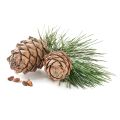
Virginian Cedarwood

In stock
0.00
(0 reviews) Write a review
MEO0581
Reward points:94 points
$2496

Virginian Cedarwood is a classic natural woody material in perfumery, obtained from Juniperus virginiana, a conifer native to North America. Despite its common name, the tree is botanically a juniper rather than a true cedar of the genus Cedrus, an important distinction when comparing different materials sold under the general name “cedarwood.”

Its scent profile is unmistakably dry, woody, clean, and pencil-like, evoking freshly sharpened pencils, dry timber, cedar chests, and fine wood shavings. Beneath this characteristic dry-wood signature are subtle balsamic, slightly smoky, resinous, and gently earthy nuances, giving the material more depth than a simple linear woody note.

One of the most attractive qualities of Virginian Cedarwood is its ability to convey the physical texture of dry wood. Rather than the creamy softness associated with sandalwood, it offers a distinctly dry, structured, and finely textured woody character. This makes it particularly valuable when a perfumer wants to reproduce the impression of dry-cut timber, pencil shavings, wooden furniture, or a carpenter’s workshop.

In composition, Virginian Cedarwood provides structure, dryness, and woody continuity. It can reinforce a woody base without making it excessively sweet or creamy and can help connect aromatic, spicy, leathery, amber, and musky elements to the deeper woody foundation of a fragrance.

It blends particularly well with vetiver, patchouli, sandalwood, frankincense, labdanum, leather accords, tobacco, spices, lavender, citrus materials, musks, and amber notes. It is highly useful in woody, aromatic, fougère, leather, amber, smoky, and contemporary unisex fragrances, as well as compositions seeking a realistic dry-timber character.

Virginian Cedarwood should also be distinguished from other cedarwood materials. Atlas Cedarwood, obtained from Cedrus atlantica, generally presents a different, often richer balsamic-woody profile, while Texas Cedarwood, although also associated with juniper species, has its own olfactory and compositional characteristics. Therefore, “cedarwood” is not a single universal scent profile; botanical origin matters.

For perfumers seeking an authentic dry wood and wood-shaving effect, Virginian Cedarwood is particularly valuable. Its appeal lies not in excessive power or sweetness, but in its ability to introduce a recognizable, natural, clean, and beautifully dry woody texture that can give a composition convincing structure and character.

+
Add to Cart
+
Virginian Cedarwood
In stock
0.00
(0 reviews) Write a review

Description

Virginian Cedarwood is a classic natural woody material in perfumery, obtained from Juniperus virginiana, a conifer native to North America. Despite its common name, the tree is botanically a juniper rather than a true cedar of the genus Cedrus, an important distinction when comparing different materials sold under the general name “cedarwood.”

Its scent profile is unmistakably dry, woody, clean, and pencil-like, evoking freshly sharpened pencils, dry timber, cedar chests, and fine wood shavings. Beneath this characteristic dry-wood signature are subtle balsamic, slightly smoky, resinous, and gently earthy nuances, giving the material more depth than a simple linear woody note.

One of the most attractive qualities of Virginian Cedarwood is its ability to convey the physical texture of dry wood. Rather than the creamy softness associated with sandalwood, it offers a distinctly dry, structured, and finely textured woody character. This makes it particularly valuable when a perfumer wants to reproduce the impression of dry-cut timber, pencil shavings, wooden furniture, or a carpenter’s workshop.

In composition, Virginian Cedarwood provides structure, dryness, and woody continuity. It can reinforce a woody base without making it excessively sweet or creamy and can help connect aromatic, spicy, leathery, amber, and musky elements to the deeper woody foundation of a fragrance.

It blends particularly well with vetiver, patchouli, sandalwood, frankincense, labdanum, leather accords, tobacco, spices, lavender, citrus materials, musks, and amber notes. It is highly useful in woody, aromatic, fougère, leather, amber, smoky, and contemporary unisex fragrances, as well as compositions seeking a realistic dry-timber character.

Virginian Cedarwood should also be distinguished from other cedarwood materials. Atlas Cedarwood, obtained from Cedrus atlantica, generally presents a different, often richer balsamic-woody profile, while Texas Cedarwood, although also associated with juniper species, has its own olfactory and compositional characteristics. Therefore, “cedarwood” is not a single universal scent profile; botanical origin matters.

For perfumers seeking an authentic dry wood and wood-shaving effect, Virginian Cedarwood is particularly valuable. Its appeal lies not in excessive power or sweetness, but in its ability to introduce a recognizable, natural, clean, and beautifully dry woody texture that can give a composition convincing structure and character.

Features

Odour Group:
  • WOODY
Origin:
UNITED STATES
Type:
Natural Essential oil

Reviews

Average Star Rating:
0.00 (0 reviews Total)
  • 5 stars
    0
  • 4 stars
    0
  • 3 stars
    0
  • 2 stars
    0
  • 1 star
    0
Have you used the product?
Tell us something about it and help others make the right decision
Show reviews with:
5 stars (0 reviews)
4 stars (0 reviews)
3 stars (0 reviews)
2 stars (0 reviews)
1 star (0 reviews)

No reviews found